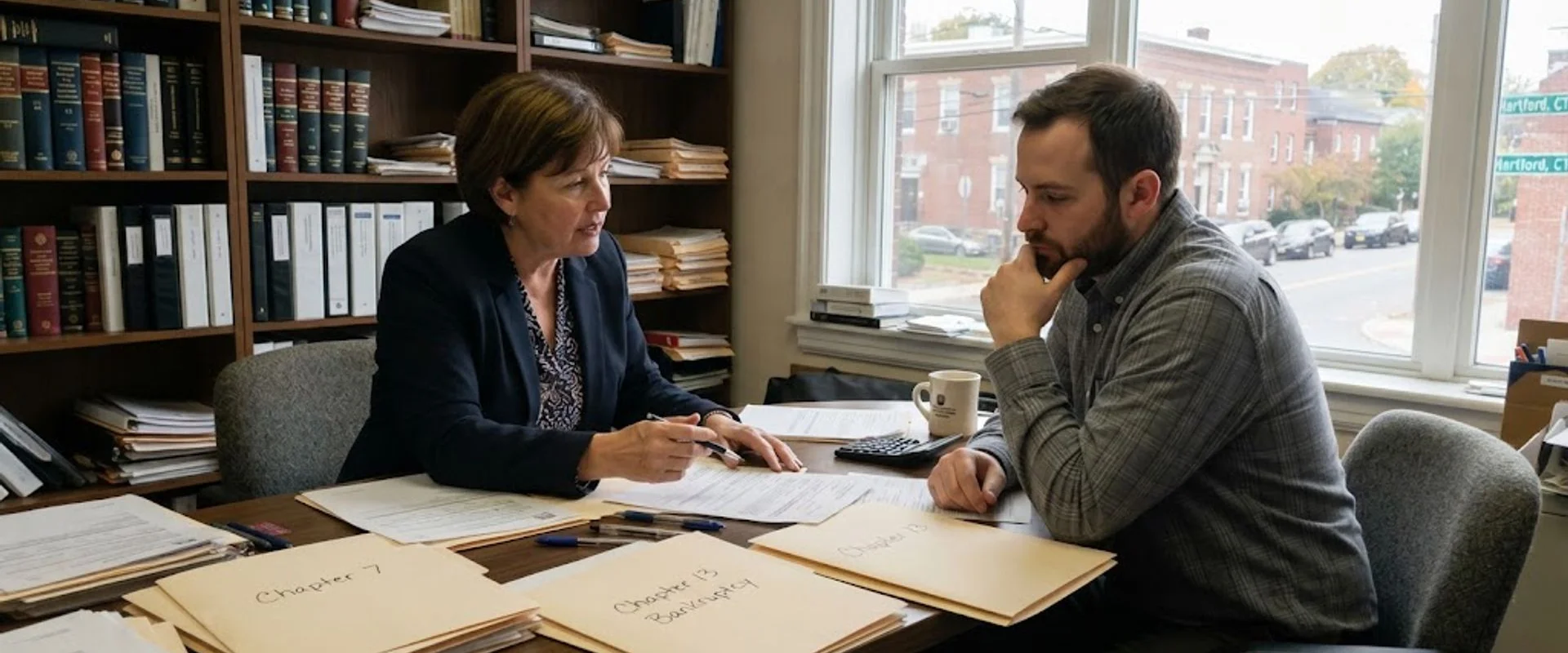
Filing for personal bankruptcy in Connecticut usually comes down to two paths: Chapter 7, a liquidation case that discharges most unsecured debt in a few months if you pass the means test, or Chapter 13, a 3-to-5-year repayment plan for people whose income is too high for Chapter 7 or who need to catch up on a mortgage or car loan to stop foreclosure. Attorneys in this category handle the means test calculation, the schedules and statement of financial affairs filed with the U.S. Bankruptcy Court for the District of Connecticut, exemption planning (deciding what property you keep), and representation at the 341 meeting of creditors. For homeowners facing foreclosure, a well-timed Chapter 13 filing can halt a sale and restructure missed payments into the plan, so a lawyer's foreclosure experience matters as much as their bankruptcy caseload.
When comparing the 6 firms listed here, look past the intake pitch. Ask how many Chapter 7 and Chapter 13 cases they actually file in a year, whether the attorney (not a paralegal) reviews your schedules before filing, and how they structure fees: Chapter 7 is typically billed as a flat fee due before filing, while Chapter 13 fees can often be split with part paid upfront and the rest folded into the plan. Confirm they're admitted to practice in the Connecticut bankruptcy court and ask directly about their experience stopping foreclosure sales through an automatic stay, since timing a filing days before a scheduled sale is a different skill than a routine debt-relief case.
Our scoring weighs verified credentials, responsiveness, case outcomes where documented, and how consistently a firm's clients report clear communication through a long Chapter 13 plan. See the full breakdown and rankings in our best bankruptcy attorneys in West Hartford guide, and read how we build these scores on the methodology page.