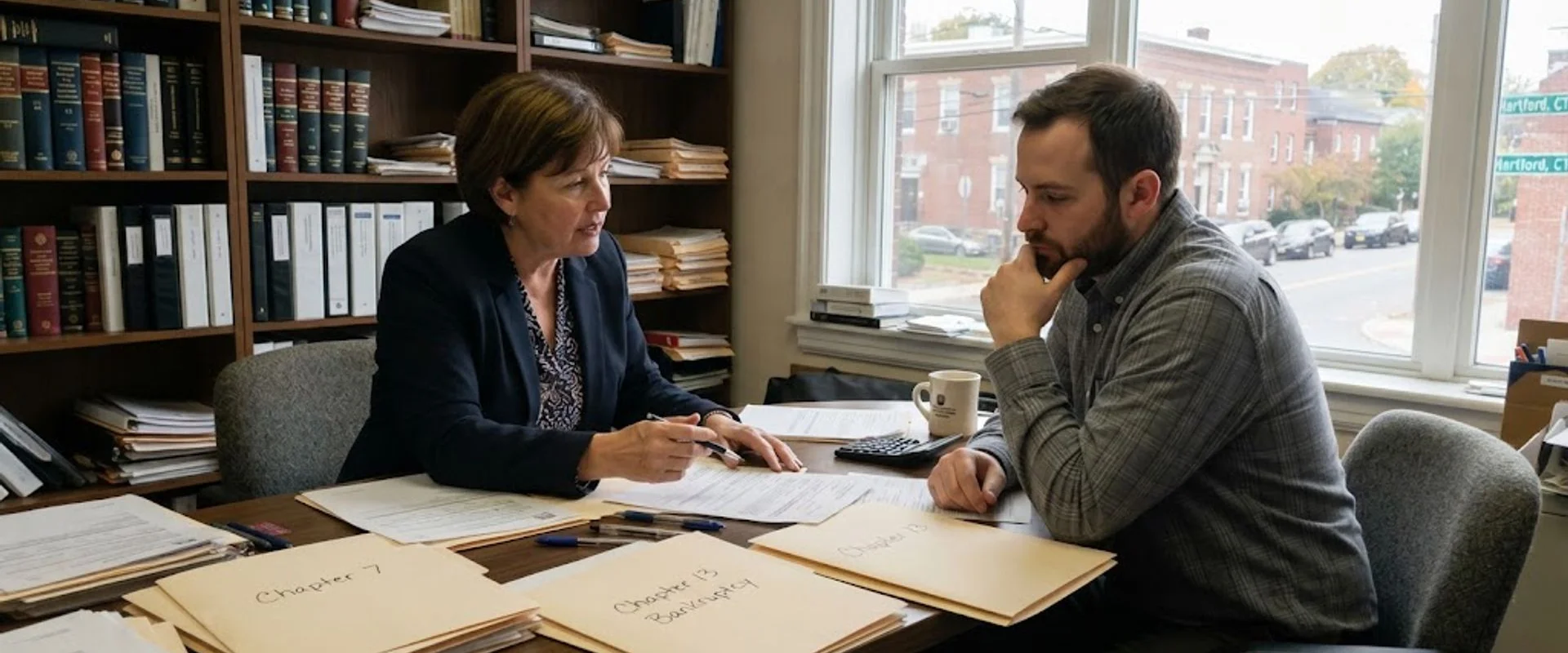
Filing for personal bankruptcy in Connecticut means choosing between Chapter 7, which liquidates non-exempt assets to wipe out most unsecured debt in a few months, and Chapter 13, which sets up a 3 to 5 year repayment plan so you can catch up on a mortgage or car loan and keep the property. Attorneys in this category also handle means testing, credit counseling requirements, the automatic stay that stops foreclosure and collection calls, and reaffirmation agreements. For homeowners facing foreclosure specifically, a Chapter 13 filing is often the tool used to halt a sale date and restructure missed payments over the life of the plan.
Hartford has 14 attorneys and firms listed in this category, and the range in experience matters more here than almost any other legal service. Look for a lawyer who regularly appears in the U.S. Bankruptcy Court for the District of Connecticut, since local judges and trustees have their own preferences on paperwork and hearing conduct. Ask upfront about flat-fee versus hourly billing, whether the fee covers the full case or just the filing, and how they handle creditor objections or a 341 meeting that doesn't go smoothly. A good sign is a firm that walks you through means testing and exemption planning before you file, not after.
Our scoring weighs verified client reviews, years of active bankruptcy practice, responsiveness, and transparency around fees and case outcomes, so you can compare firms on more than star rating alone. See the full breakdown and rankings in our ranked guide to Hartford bankruptcy attorneys, and read how we build these scores on our methodology page.